
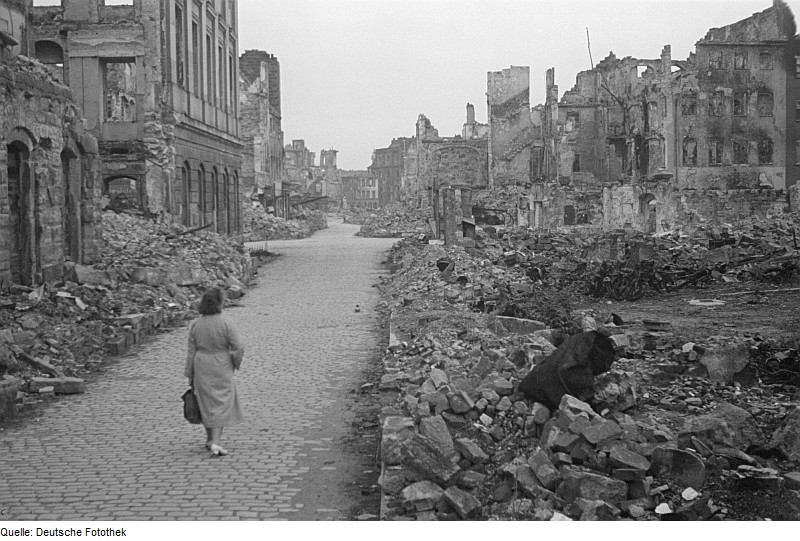
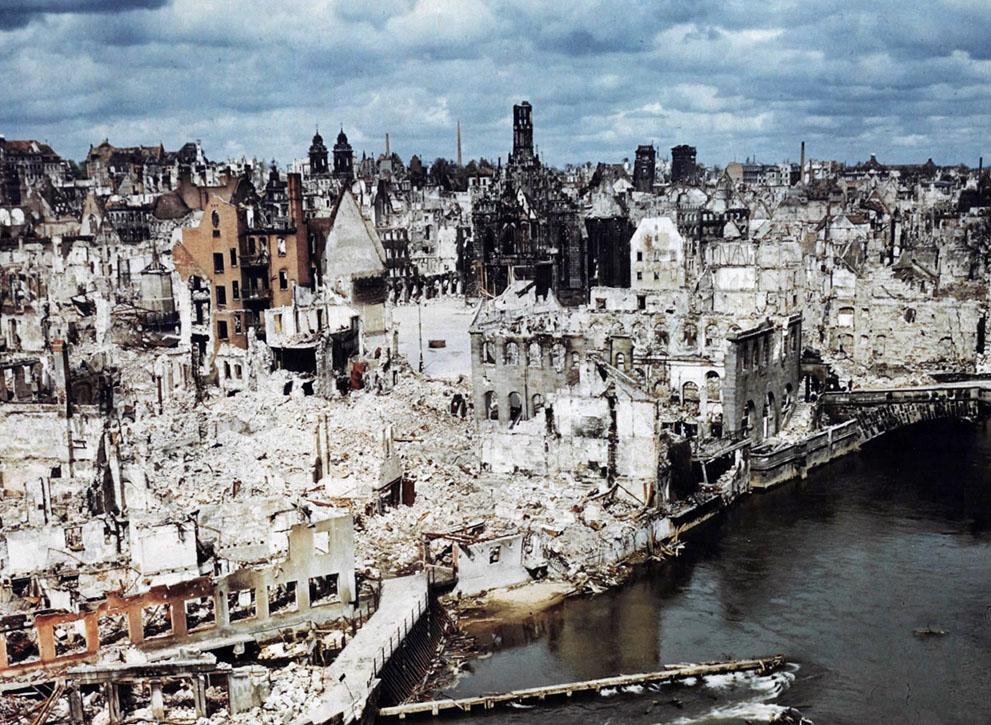

Februrary 13-14, 1945. The British and Americans almost completely destroyed the city of Dresden, Germany’s seventh largest city at the time and a Baroque jewel akin to Florence/Firenze as one of the major European cultural capitals. Over 35,000 people died as a result of this massive, one day bombardment- many being burned to death by the firestorm unleashed by the incendiary bombs. In comparison, 32,000 people died in London over the course of 5 years of German bombing of that (much larger) city. Interestingly, one of the few buildings in Dresden to survive the destruction was the main art museum. But, ironically, the museum and its massive collections survived the bombing only to then be completely looted by the Soviets when they invaded shortly afterwards. The war ended three months later. Some argue that the bombing was totally unnecessary – an act of vengeance more than a military operation, payback being a bitch- as the Nazis were clearly collapsing quickly by this point and the Allies had taken back much of Europe by this point and completely surrounded Germany. Others argue that it was a legitimate military target as there was a lot of industry there and it was a transportation hub for the Nazi military – and that it helped hasten the end of the war while also sending a message to Stalin of the Wests superior strength should Stalin be entertaining any ambitions of taking over Europe after the Nazi defeat.
 MATTHEW'S ISLAND