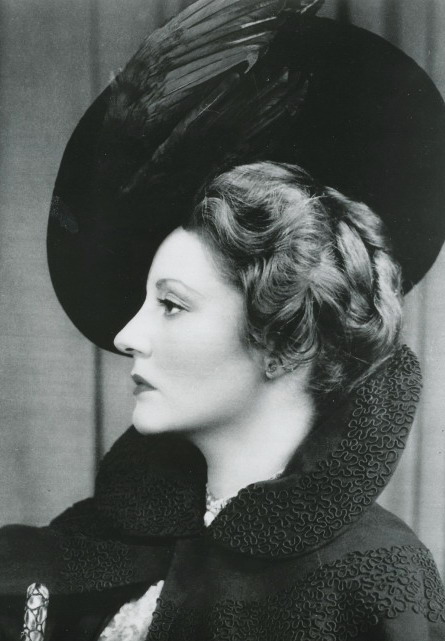
 Again, WTF were people doing putting dead bird wings on their hats? Feathers I understand, but whole wings?
MATTHEW'S ISLAND

Again, WTF were people doing putting dead bird wings on their hats? Feathers I understand, but whole wings?
 MATTHEW'S ISLAND
Well, Bette Davis playing the same part has a whole f*cking bird on her head, lol. Makes me wonder if it was something about Regina Giddens.

At the turn of the 19th century in the U.S. and Europe, it became wildly popular—and that’s an understatement—for ladies to wear feathers and whole taxidermied birds on their hats. One ornithologist reported taking two walks in Manhattan in 1886 and counting 700 hats, 525 of which were topped by feathers or birds.
At the time, not many people thought much of killing the birds. Europeans and their American cousins “didn’t believe they could put a dent in an animal’s population.” Birds seemed to be an “abundant, even inexhaustible” natural resource. So take they did. Millions of birds all over the world were harvested for hat makers for years.
Here is one example of the wholesale slaughter of birds
A single 1892 order of feathers by a London dealer … included 6,000 bird of paradise, 40,000 hummingbird and 360,000 various East Indian bird feathers.
In 1902 an auction in London sold 1,608 30 ounce packages of heron … plumes. Each ounce of plume required the use of four herons, therefore each package used the plumes of 120 herons, for a grand total of 192,960 herons killed.
Ornithologists started to sit up and take notice. One estimated that 67 types of birds—often including all of their sub-species—were at risk for extinction. Not only were birds killed for their feathers, they were killed when their feathers were at their most resplendent. This meant killing them during mating season, interrupting their reproductive cycle and often leaving baby birds orphaned.
A campaign to end the practice began. In Europe the Royal Society for the Protection of Birds targeted women. They launched a sexist campaign accusing women of supporting the heartless slaughter of birds.
Ironically, middle-class women were at the forefront of the bird preservation movement. They were the rank and file and, thanks in part to their work, in the U.S. the movement led to the formation of the first Audubon societies. The Massachusetts Audubon Society organized a feather boycott, angering hat makers who called them “extremists” and “sentimentalists.” Politicians worried out loud about the loss of jobs. Missouri Senator James Reed complained.
Why there should be any sympathy or sentiment about a long-legged, long-beaked, long-necked bird that lives in swamps and eats tadpoles.
Ultimately the Massachusetts Audubon Society succeeded in pushing through the first federal-level conservation legislation in the U.S., the Lacey Act of 1900.
Thanks for all that info! Not sure how much of that I already knew but I do recall reading about how there used to be (until mid 20th century?) lots and lots and lots of some bird (a dove? a pigeon?) that when eaten was called “squab”. So many no one thought they could ever keep up with the runaway population – but they did hunt them to the point that they’re basically gone now. Anyway, wearing whole bird wings on your head is kind of macabre in my book.